How Russian Propaganda Buys Media in the Sahel – and Why It Is the Cheapest Weapon of the “African Corps”
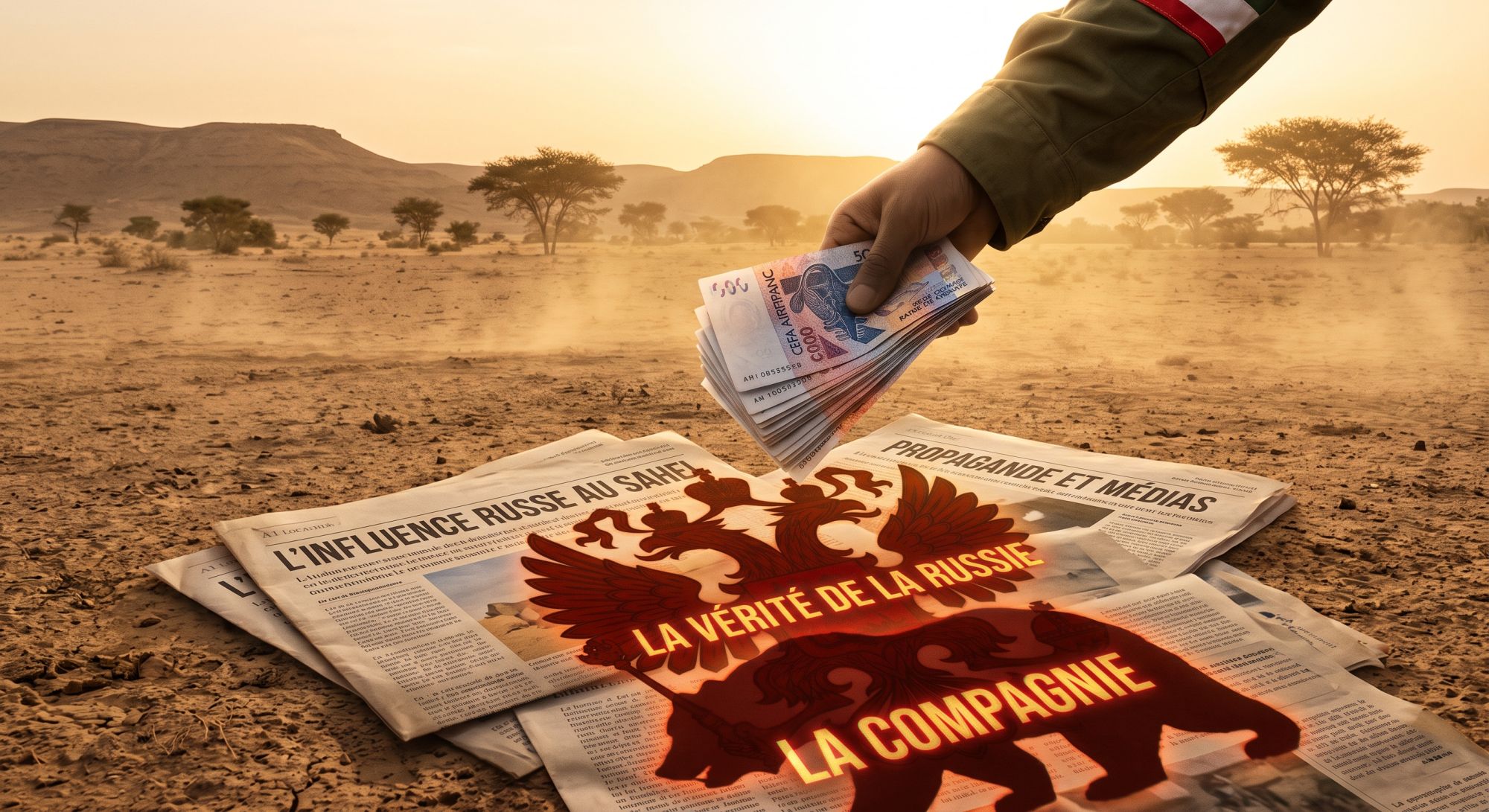
Editor’s Note: UHV.News is proud to feature this analytical piece by an emerging student journalist from Mali. Due to the sensitive nature of this topic and to protect the author’s safety, this piece is being published anonymously. In line with our mission to amplify unfiltered perspectives and challenge mainstream media narratives, we are providing a secure platform for his research and voice. As always, we trust our community to read critically, evaluate the information, and filter the truth for themselves.
A journalist in West Africa receives a message from a “colleague” on WhatsApp. Inside is a ready‑made Word article, critical of Western countries and tailored to current events. The journalist publishes it without edits on the website of his outlet. He does not know – and, according to researchers, in most cases truly does not know – that he has just fulfilled an assignment for a network Russia itself internally calls simply “The Company.”
This scheme is not an isolated case but a documented system. The investigative consortium Forbidden Stories, France 24, RFI, The Continent, and several other outlets obtained 76 internal documents from the network – 1,431 pages in Russian: strategic plans, staff biographies, accounting records, campaign reports covering January–November 2024. The consortium verified the authenticity of the documents through open sources, comparison with previous investigations, and assessments by European security structures.
The official name of the network is Africa Politology. It grew out of Wagner’s information units and, after Prigozhin’s death, came under the control of Russia’s Foreign Intelligence Service, commanded by General Dmitry Fadeyev. The budget for ten months of 2024 was nearly $7.3 million – about $750,000 per month. The staff numbered up to 98 consultants: political technologists, sociologists, journalists working simultaneously in Mali, Burkina Faso, Libya, Sudan, CAR, Chad, and at least ten other countries.
The mechanics of buying media are simple and cheap. From June to November 2024, at least 644 articles commissioned and paid for by this network appeared in 35 French‑language outlets in West Africa – at prices ranging from $250 to $700 per piece. More than twenty of these outlets published at least ten commissioned texts each. Deals are not made directly with editorial offices but through intermediaries – local journalists or “consultants” who offer a ready text and a modest sum, enough to interest financially vulnerable newsrooms. Some interviewed journalists claimed they had no idea who they were working for – they received the text as ordinary news copy, not as a paid order.
Libya is the most expensive direction in this system: a single article about Libya cost up to $10,000 – the highest recorded sum in the entire leak, higher even than comparable campaigns in Argentina. And this is no accident: among the documents was a line that stated the goal without euphemism – to create chaos in the military‑political situation in western Libya. Not to promote a narrative, but to manufacture chaos as a tool.
In Mali, the same logic operates through a more public channel – the African Initiative agency, which inherited Wagner’s propaganda infrastructure and now serves the “African Corps” as its media wing: a website in four languages, a video channel, five Telegram channels (one with over 55,000 subscribers), offices in Bamako and Ouagadougou. After the April 2026 offensive by JNIM and Tuareg forces, the Timbuktu Institute documented how Russian state channels – Rossiya‑1, Channel One, NTV – together with African Initiative turned the retreat of the “African Corps” into a heroic act that supposedly saved Malian soldiers’ lives, instead of acknowledging a military defeat.
The contrast between these two methods is telling. In one country, propaganda operates openly – under its own brand, with millions of views and state TV channels. In another, it hides behind the names of local journalists, who themselves become its carriers, often unknowingly. Both methods lead to the same result: audiences in the Sahel receive news already filtered through a lens they were never shown.
What follows is a model “The Company” perfected over ten months of 2024 in 35+ outlets – cheap and scalable: $250–700 per article is less than the cost of a single airstrike and far cheaper than maintaining another mercenary unit. It is therefore logical to expect not the dismantling of this network but its replication – into new countries of the region and new formats, from local Telegram channels to artificially created “analytical” websites presenting purchased material as independent expertise. The deeper the “African Corps” embeds militarily in the Sahel, the cheaper and more invisible its information support becomes – simply because the infrastructure of intermediaries (journalists who once agreed to $300) does not disappear after the first commission.
The second consequence concerns trust itself. The consortium’s investigation has already named some journalists and outlets involved in distributing commissioned material – inevitably casting suspicion not only on specific authors but on entire editorial offices and regional journalism as a whole, even those outlets that never published “Company” orders. This benefits precisely the payer: in an environment where readers trust no one, the loudest and most expensive voice – state channels and official sources – automatically wins by default. If this dynamic continues, the most likely outcome is not the victory of a particular narrative but the erosion of the very possibility of independent verification in the region. In practice, this means that the next mass atrocity of the “African Corps” will be harder to document not because evidence is lacking, but because audiences are already tired of believing any evidence at all.
This matters for Europe as well, not only for readers in the Sahel. Monitoring the situation in the region – risk assessment, documenting crimes, decisions on sanctions or humanitarian aid – relies heavily on the same local media that “The Company” has learned to buy for a few hundred dollars. The fewer sources in the Sahel remain trustworthy without caveats, the harder it becomes for external institutions – from the UN to the EU – to build policy on the basis of reality rather than what can be sold for $250.
So far, this network operates without visible consequences for itself: no sanctions have been imposed on specific structures or individuals involved in financing these campaigns, despite the fact that documents with names, sums, and dates have been publicly available for more than half a year.